2482 Dufferin St, York, ON M6B 3R1 | Open 24 hours | Licensed & insured exterminators serving Toronto and the GTA

Cockroach Control in Toronto Apartments: What Actually Works

Finding a cockroach in your Toronto apartment is an unsettling experience. It often brings up immediate questions: how did it get here, how many are there, and what does this say about the cleanliness of the unit? The answers are more straightforward than most residents expect, and understanding them makes it much easier to deal with the problem effectively. Pest Control Pro provides cockroach control services Toronto and the GTA, and one thing stands out after years of apartment calls: the approach that works in a standalone house often does the opposite in a multi-unit building.
This guide explains why Toronto apartment cockroach problems behave differently, which species are responsible, why standard consumer sprays reliably make the situation worse, and what professional treatment in a shared building actually involves.
Why Apartment Cockroaches Are a Different Problem
In a standalone house, a cockroach infestation is largely a self-contained problem. Seal the entry points, eliminate the nest, and the problem is resolved. In a Toronto apartment or condo building, the equation changes significantly because of the shared infrastructure between units.
Toronto’s apartment buildings, particularly the older stock common in North York, Etobicoke, East York, and Scarborough, have shared plumbing chases, electrical conduits, wall voids, and HVAC pathways connecting adjacent units on the same floor and across multiple floors. Cockroaches travel through these pathways continuously. A German cockroach colony established in one unit will explore available corridors and establish satellite populations in neighbouring units over time. This is why treating only one unit, even thoroughly, often produces temporary improvement followed by reinfestation from adjacent spaces.
Understanding this building-spread mechanism changes the entire treatment strategy. Individual unit treatment is necessary but not sufficient in many Toronto apartment buildings. Coordinated building-wide assessment is frequently the only approach that produces lasting results.
The Cockroach Species Most Common in Toronto Apartments
German Cockroaches: The Primary Culprit
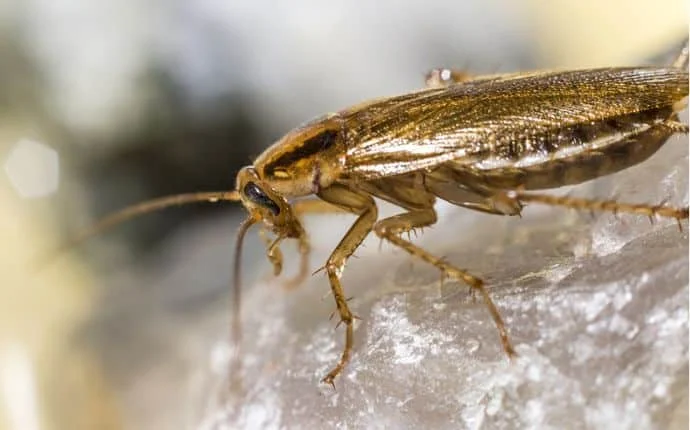
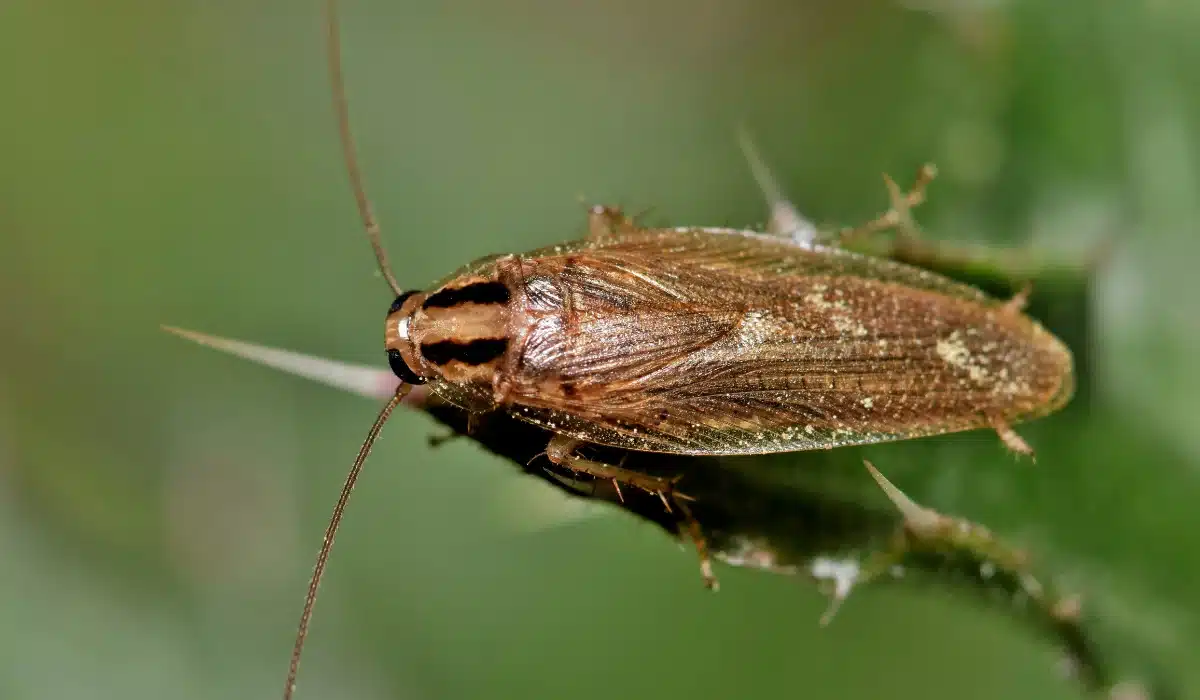
The German cockroach (Blattella germanica) is responsible for the overwhelming majority of Toronto apartment infestations. Adults are small, measuring 12 to 15 millimetres, pale brown with two dark stripes running lengthwise behind the head. They prefer warm, humid environments close to food and moisture sources, which makes kitchen appliances, bathroom plumbing, and cabinet interiors their primary harborage locations.
German cockroaches reproduce faster than any other cockroach species encountered in Canadian urban environments. A single female carries an egg case containing 30 to 40 eggs and may produce four to six cases across her lifetime. A small initial population can reach hundreds within a few months under favourable conditions. This reproduction rate is the reason that a problem that seems minor in week one can feel overwhelming by week six.
American and Oriental Cockroaches: Less Common But Worth Knowing
American cockroaches (Periplaneta americana) are significantly larger, reaching up to 40 millimetres, reddish-brown, and prefer damp basement spaces, boiler rooms, and drain areas more than kitchen environments. They are encountered less frequently in upper-floor Toronto apartments but are common in basement units and older buildings with damp utility spaces. Oriental cockroaches are dark brown to black, slower-moving, and strongly associated with drains and cool, damp areas. Both species require different treatment approaches than German cockroaches because of where they establish and how they move through the building infrastructure.
Why Cockroaches Keep Coming Back After You Clean
This is one of the most common and frustrating experiences for Toronto apartment residents dealing with cockroaches. A thorough clean, a store-bought spray, and apparent improvement, followed by the cockroaches returning within days or weeks. Two specific reasons explain why this happens.
The first reason is incomplete population elimination. The visible cockroaches in a kitchen at night represent a small fraction of the total population. German cockroaches spend roughly 75% of their time hidden in harborage sites: inside wall voids, behind outlet plates, under appliances, inside cabinet hinge channels, where cleaning and surface spray cannot reach. The visible individuals are foragers. Eliminating foragers does not affect the colony.
The second reason is building reinfestation. Even when treatment genuinely eliminates the population in one unit, cockroaches from adjacent units with active infestations migrate back through shared pathways over the following weeks. The unit appears clean for a short period, then activity begins again from the same entry corridors. This is the cycle that keeps repeating without building-wide coordination.
Signs You Have a Cockroach Problem in Your Toronto Apartment
- Droppings near food and moisture sources. German cockroach droppings resemble small coffee grounds or black pepper granules. They concentrate behind the refrigerator, under the stove, inside cabinet hinges, and around plumbing under sinks. Fresh droppings are dark and slightly moist. Older droppings dry and lighten in colour.
- Egg cases in concealed locations. German cockroach egg cases, known as oothecae, are small, brown, capsule-shaped, approximately 6 to 8 millimetres long. They are deposited in protected locations near moisture, inside cabinet corners, under appliance edges, and behind dishwashers. Finding one egg case indicates established reproduction rather than a single wandering individual.
- Musty, oily odour. Established German cockroach populations produce a characteristic musty, oily odour from aggregation pheromones and waste products. This odour becomes noticeable in kitchens and bathrooms as populations grow and is one of the clearest signs of a developing infestation.
- Daytime sightings. German cockroaches are nocturnal. Seeing them during daylight hours is a reliable indicator that population pressure is high enough to force individuals out of harborage during non-peak activity periods. Daytime sightings signal a more developed infestation than nighttime-only activity.
Why DIY Sprays Make the Problem Worse in Apartment Buildings
Consumer cockroach spray products sold at hardware stores and pharmacies are contact-kill products. They kill the individuals they directly contact on treated surfaces. They do not reach the population inside wall voids, cabinet structures, and appliance interiors where the colony actually lives.
More importantly for Toronto apartment residents, contact spray triggers a dispersal response in surviving cockroach populations. When cockroaches detect the chemical signature of a residual spray in a treated area, the aggregation pheromones that hold the colony together are disrupted, prompting individuals to scatter to untreated areas. In a standalone house, this means cockroaches move to a different room. In a shared apartment building, this means they move into adjacent units through the shared plumbing and wall pathways described above.
The net result is that consumer spray treatment in one Toronto apartment unit frequently causes active migration of cockroaches into neighbouring units without resolving the source population. This is the specific mechanism that makes DIY spray the wrong approach for apartment building infestations and why professional treatment with different chemistry and placement logic produces better outcomes in shared buildings.
What Professional Cockroach Treatment Actually Does
Professional cockroach treatment for Toronto apartment buildings uses gel bait rather than contact spray as the primary active agent. Gel bait is applied in small amounts to known harborage locations: inside cabinet hinges, under appliances, around plumbing penetrations, and inside wall void access points, using a bait gun that deposits the product in the specific locations where cockroaches spend the majority of their time.
Gel bait works through ingestion rather than contact. Cockroaches consume the bait and carry the active ingredient back to the harborage site, where secondary poisoning spreads through the colony through contact and cannibalistic behaviour. This mechanism reaches the hidden population that contact spray cannot touch. Importantly, gel bait does not trigger the dispersal response that contact spray produces. The colony remains in place while the active ingredient spreads through it, which is why gel bait treatment produces colony elimination rather than colony displacement.
PMRA-approved gel bait products are applied by MECP-licensed technicians at targeted harborage locations in both the affected unit and, where building management permits, in adjacent units and shared utility spaces. The SPMAO, CPMA, and NPMA certifications held by Pest Control Pro reflect the professional training standard that distinguishes targeted harborage treatment from the generic approach that produces temporary results.
When to Involve Your Landlord or Building Management
Toronto tenants have specific rights regarding pest control under the Ontario Residential Tenancies Act. Landlords are legally responsible for maintaining rental properties in a good state of repair, which includes addressing pest infestations. When cockroach activity is confirmed in a Toronto apartment, two steps matter most.
Report the infestation in writing to building management or the landlord as soon as activity is confirmed. Written notification creates a record and triggers the landlord’s legal obligation to respond. Request building-wide inspection rather than single-unit treatment, particularly in older buildings with known shared utility pathways. Single-unit treatment alone is rarely sufficient when the source population is in an adjacent unit or shared building infrastructure.
Where building management does not respond appropriately, tenants can contact the Landlord and Tenant Board for guidance on enforcement options under Ontario tenancy legislation. For the health context relevant to cockroach infestations in residential properties, Health Canada’s guidance on cockroach control at canada covers the public health basis for professional intervention standards.
How to Prevent Cockroaches From Returning
After professional treatment eliminates the active population, specific habits significantly reduce the risk of reinfestation from adjacent units or from items entering the apartment.
Store all food in sealed containers. German cockroaches are attracted by food residue, grease, and organic material. Airtight containers for dry goods, regular cleaning of appliance interiors and grease traps, and prompt disposal of food waste remove the food sources that sustain reinfestation. Address moisture by fixing dripping taps and ensuring drain covers are in place, removing the water access that sustains cockroach populations in bathroom and kitchen environments.
Seal gaps around pipes and cables. The plumbing penetrations, cable entries, and gaps around baseboards where shared building infrastructure passes through unit walls are the primary migration pathways. Caulking these gaps after treatment significantly reduces the migration corridor that allows reinfestation from adjacent units. Inspect second-hand items before bringing them inside. Used appliances, furniture, and cardboard boxes are documented as cockroach introduction pathways in Toronto apartment buildings.
Conclusion
Cockroach control in Toronto apartments works differently than it does in standalone homes because of the shared infrastructure connecting units throughout the building. Consumer spray moves the problem without solving it. Professional gel bait treatment reaches the colony where it actually lives. Building management coordination addresses the source populations in adjacent units that cause reinfestation when individual unit treatment is used alone.
Pest Control Pro serves Toronto apartment residents across North York, Scarborough, Etobicoke, East York, and the wider GTA with MECP-licensed cockroach treatment, PMRA-approved products, and written documentation on every job.
Frequently Asked Questions
1. Why do cockroaches keep coming back into my Toronto apartment even after I spray?
Consumer spray products kill the cockroaches they directly contact on surfaces, but do not reach the colony hidden inside wall voids, appliance interiors, and cabinet structures where the majority of the population lives. Additionally, contact spray triggers a dispersal response in surviving cockroaches, causing them to migrate into adjacent units through shared plumbing and wall pathways. The problem appears to improve briefly as foragers are killed, then returns as the hidden colony continues and cockroaches migrate back from neighbouring units. Professional gel bait treatment reaches the harborage sites where the colony actually lives and does not trigger dispersal, which is why it produces lasting results that consumer spray cannot.
2. Is a cockroach infestation in my Toronto apartment my fault?
No. German cockroach infestations in Toronto apartments most commonly originate from building-wide migration through shared plumbing chases, electrical conduits, and wall voids rather than from hygiene failures in individual units. A cockroach infestation in a clean, well-maintained Toronto apartment is a documented and common occurrence in older multi-unit buildings throughout North York, Scarborough, and Etobicoke. Cleanliness affects how quickly a population grows once established, but it is rarely the cause of initial introduction in apartment buildings, where shared infrastructure provides continuous corridors between units.
3. How much does professional cockroach treatment cost in Toronto?
Professional cockroach treatment starts from $150 for a standard apartment unit assessment and gel bait treatment using PMRA-approved products. The final cost depends on the size of the unit, the severity of the infestation, and whether adjacent unit or building-wide treatment is recommended following the initial assessment. Every appointment includes a free on-site inspection with a written quote before any treatment begins. No hidden fees apply.
4. Should my landlord pay for cockroach treatment in my Toronto apartment?
Under the Ontario Residential Tenancies Act, landlords are responsible for maintaining rental properties free from pests. A landlord who fails to address a cockroach infestation after receiving written notification from a tenant is in breach of their maintenance obligations under Ontario law. Tenants should document the infestation with photographs, report it in writing to the landlord or property manager, and keep copies of all correspondence. Where landlords fail to respond within a reasonable timeframe, tenants can contact the Landlord and Tenant Board for guidance on enforcement options.
5. How long does professional cockroach treatment take to work in a Toronto apartment?
Gel bait treatment begins working within 24 to 72 hours as foraging cockroaches consume the bait and carry the active ingredient back to the harborage site. Visible activity typically reduces significantly within one week and resolves fully within two to three weeks in most standard apartment infestations. A follow-up inspection after three weeks confirms full elimination and assesses whether any adjacent unit activity requires additional attention. In buildings where multiple units are simultaneously affected, full-resolution timelines extend proportionally with the scope of building-wide infestation.