2482 Dufferin St, York, ON M6B 3R1 | Open 24 hours | Licensed & insured exterminators serving Toronto and the GTA

Rat Removal in Toronto: Costs, Warning Signs, and How to Keep Them Out

Rats are not a new problem in Toronto but the scale of rat activity across the GTA in 2026 is measurably worse than it was five years ago. Toronto homeowners in neighbourhoods they have lived in for decades are reporting rat activity for the first time. Properties that have never had a rodent problem are suddenly dealing with burrow entrances in garden beds, gnaw damage to structural elements, and the unmistakable evidence of an established rat population operating within and beneath the home.
Understanding why rat activity is increasing in Toronto, how to identify the signs of an infestation, what professional Rat Removal in Toronto services involve, and which prevention measures help stop future infestations gives homeowners the information they need to make informed decisions and protect their property from ongoing rodent problems.
Why Toronto Has a Rat Problem That Is Getting Worse in 2026
Construction Displacement Across the GTA
The single largest driver of increased rat activity in Toronto residential neighbourhoods in 2026 is infrastructure construction. The Eglinton Crosstown LRT, the Ontario Line subway, and the large-scale condo and mixed-use development projects underway across the inner city and inner suburbs are physically excavating and disrupting the underground burrowing networks that Norway rat colonies have established over years.
When construction equipment excavates an established rat colony, the population disperses rather than disappears. Rats relocate to the nearest undisturbed residential area, typically the residential street immediately adjacent to the construction site. Toronto homeowners who live within one to three blocks of active major construction and who are noticing rat activity for the first time are almost certainly experiencing this displacement. The rat population has not grown from nothing. It has been pushed from its previous location into the nearest available habitat.
Toronto’s Combined Sewer System and Older Housing Stock
Toronto’s combined sewer and storm drain system, which serves older parts of the city including Leslieville, East York, Parkdale, Roncesvalles, The Junction, and parts of North York, creates a specific rat access pathway that does not exist in areas with separated sewer systems. Norway rats swim through sewer infrastructure and enter buildings through compromised floor drains, cracked sewer lateral connections, and damaged cleanout caps in older basement floors.
This sewer entry mechanism explains why rat activity in Toronto’s older neighbourhoods can appear inside buildings without any visible above-grade entry point. A property that appears structurally sound from the exterior can be accessible from below through the sewer connection, making sewer infrastructure assessment an essential part of any rat removal program in pre-war Toronto construction.
Norway Rat vs Roof Rat: Knowing Which You Have Changes Everything
Norway Rats: The Primary Toronto Species
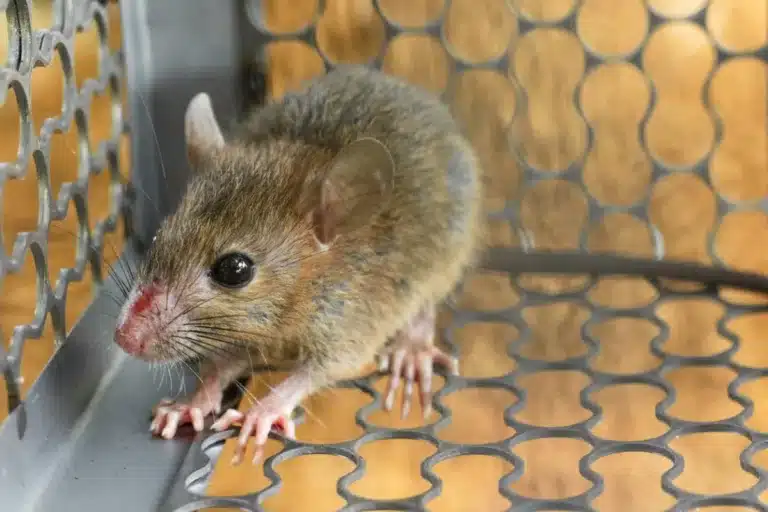
The Norway rat, also known as the brown rat or Rattus norvegicus, is the dominant rat species in Toronto and across the GTA. Norway rats are burrowers that establish nesting sites at or below ground level. They are heavy-bodied with blunt muzzles, small ears, and tails shorter than the combined length of the head and body. Adult Norway rats weigh 200 to 500 grams, making them significantly larger than house mice in every dimension.
Norway rats travel along the ground rather than climbing. Their entry points into Toronto buildings are primarily at or below grade, specifically around pipe penetrations in basement walls, foundation gaps, and through the sewer system. Bait station placement for Norway rats is at ground level along the walls and foundations the population is using as travel corridors.
Roof Rats: Less Common but Present in the GTA
The roof rat, Rattus rattus, is less common in Toronto than in warmer southern cities but is present in certain GTA areas, particularly properties with significant tree cover and elevated structures providing climbing access. Roof rats are slender with pointed muzzles, large ears, and tails longer than the combined head and body length, typically weighing 150 to 250 grams.
Roof rats access buildings through above-grade openings including roofline gaps, damaged soffit panels, and any point where a tree branch provides a bridge to the building. Their entry points and bait station placement requirements differ entirely from Norway rats. Treating a roof rat infestation with ground-level bait stations produces limited results because the population is travelling and nesting above the placement height.

Warning Signs of Rats in a Toronto Home
Norway rat droppings are 15 to 20 millimetres in length with blunt rounded ends, approximately the size of a large raisin. Mouse droppings are 3 to 6 millimetres with pointed ends. Finding droppings of rat size in a Toronto basement, kitchen, or crawl space indicates a rat problem requiring a different response than a mouse problem. Fresh droppings are dark and moist. Droppings that have dried and greyed indicate older activity at that location.
Burrow entrances of 6 to 9 centimetres diameter with smooth compacted soil at the opening confirm Norway rat presence along building foundations. Active burrow entrances have fresh soil excavated nearby. Rat runways are the worn pathways along walls, fences, and foundations that rats travel repeatedly, producing greasy rub marks from rat fur along the edges of structural elements the population uses as travel corridors.
Rat gnaw damage is distinguishable from mouse gnaw damage by mark size. Norway rat incisor width produces gnaw marks of 4 to 6 millimetres, significantly larger than the 1 to 2 millimetre marks mice produce. Gnaw damage to wiring insulation creates immediate fire risk in Toronto’s pre-war homes where original wiring runs through wall voids. Heavy thumping and dragging sounds within wall voids and beneath floorboards during nighttime hours reflect Norway rat activity. A strong ammonia-like odour in enclosed basement spaces indicates accumulated rat urine and requires immediate professional response for both the infestation and the contamination it represents.
How Rats Get Into Toronto Homes
Norway rats access Toronto homes primarily through gaps at or below ground level. Pipe penetrations through basement walls where the seal has deteriorated, gaps in older foundation mortar, utility line entries, and basement window frames with failed weatherstripping are all documented Norway rat entry points. A Norway rat can compress through a gap of approximately 25 millimetres, the diameter of a standard Canadian quarter.
The sewer entry pathway specific to Toronto older neighbourhoods requires direct assessment. Rats enter through floor drains where the trap has dried out or been removed, through cracked sewer laterals beneath the basement floor, and through deteriorated cleanout caps. Signs of sewer entry include rat activity concentrated near floor drains with no obvious above-grade entry, droppings and tracks along the basement floor perimeter, and in some cases direct observation of rats emerging from or entering floor drains. Any licensed Toronto exterminator who does not assess the basement drain condition during the initial inspection is not providing a complete rat removal evaluation.
Roof rats where present use above-grade entry points, specifically soffit and fascia gaps, rooftop vent openings, and any elevated point where climbing access exists from adjacent trees or structures.
Health Risks Specific to Rat Infestations in Toronto
Norway rats in Toronto carry leptospirosis, a bacterial infection transmitted through contact with rat urine. Rat urine deposited on basement floors, crawl space surfaces, and along travel routes creates contamination that persists after the population has been removed. Leptospirosis presents initially as severe flu-like illness and can progress to kidney failure and liver damage if untreated. Professional decontamination of rat-contaminated areas following removal is a health necessity specific to rat infestations.
Hantavirus is transmitted through inhalation of airborne particles from rat droppings, urine, and nesting material. Toronto homeowners who discover rat nesting material or accumulated droppings in a confined basement or crawl space should not disturb this material without appropriate respiratory protection. Salmonella transmitted through rat contact with food storage areas and kitchen surfaces creates a direct food safety risk that requires surface decontamination and disposal of potentially contaminated food products before the kitchen is used for food preparation.
What Professional Rat Removal Actually Involves
A professional rat removal inspection in Toronto covers species identification, entry point mapping at both grade and above-grade levels, sewer and drain system assessment for properties in older neighbourhoods, and runway identification for bait station positioning. The treatment program that follows is built on this inspection rather than a generic protocol applied without site-specific diagnosis.
The rodenticide formulations most effective for established rat populations in Toronto can only be placed by licensed technicians under Ontario’s MECP pesticide applicator licensing requirement. Tamper-resistant bait stations placed on active runways along the building perimeter contain the rodenticide in a format that prevents access by children, pets, and non-target wildlife while allowing rats to access the bait from inside the station. Pest Control Pro positions bait stations as part of a comprehensive program that combines MECP-licensed baiting with the entry point sealing and follow-up assessment that baiting alone cannot replace.
Entry point sealing for rats requires rodent-proof materials including steel mesh, hardware cloth, concrete, and metal flashing. Consumer-grade foam, caulk, and steel wool are insufficient because Norway rats gnaw through them. Sewer drain management for properties with confirmed sewer entry includes drain trap refilling, floor drain cover installation, and where necessary coordination with a licensed plumber for sewer lateral repair.
Decontamination of rat-contaminated areas addresses the leptospirosis and hantavirus risks that accumulated rat waste creates, involving safe removal of nesting material with appropriate respiratory protection, disinfection of contaminated surfaces, and replacement of heavily contaminated insulation material.
What Rat Removal Costs in Toronto in 2026
A contained rat infestation with limited entry points and activity concentrated in one area runs approximately $250 to $400 for a standard treatment program including inspection, bait station placement, and basic entry point sealing. A moderate infestation with multiple entry points and established burrow systems runs $400 to $700 including more extensive exclusion work and follow-up visits. A severe infestation involving structural damage, sewer entry involvement, or decontamination requirements runs $700 or more depending on scope.
Property age is the primary cost variable after infestation severity. Pre-war Toronto homes with stone or brick foundations and combined sewer connections require more extensive assessment and more labour-intensive exclusion work than newer construction. Sewer involvement adds cost beyond surface exclusion, specifically drain infrastructure management and in some cases plumber coordination for sewer lateral repair.
Every Pest Control Pro rat removal job begins with a free on-site inspection and a written quote covering treatment scope, materials, and total cost before any commitment is made.
Why DIY Rat Control Fails in Toronto
Consumer snap traps sized for mice produce limited results on Norway rats. Consumer rodenticide formulations available without a licence in Ontario are lower-potency than what MECP-licensed technicians deploy. The sewer entry pathway that is specific to Toronto’s older neighbourhoods is entirely beyond the reach of any consumer product or technique. A homeowner who traps and baits without addressing a sewer-connected entry pathway manages the visible population while the access route that feeds it remains open. This explains the pattern Toronto homeowners describe as rats that keep returning regardless of what has been tried.
How to Keep Rats Out of Your Toronto Home
Sealing every gap of 25 millimetres or larger at or below grade with rodent-proof materials is the foundation of rat exclusion. Ensuring that basement floor drain traps are filled and drain covers are in place addresses the sewer entry pathway. Removing nesting site conditions including wood piles against the building, dense ground cover along foundations, and accessible compost systems eliminates the harborage that attracts rats to the property.
For Toronto properties adjacent to active construction or in older neighbourhoods with known rat pressure, a proactive inspection by a licensed GTA exterminator before the fall season is the most cost-effective prevention investment available. Identifying and sealing entry points before rats enter costs a fraction of what removing an established indoor rat population costs after the fact.
Conclusion
Mice Control in Toronto in 2026 requires understanding the specific conditions this city creates: construction displacement pushing established colonies into residential streets, combined sewer infrastructure enabling below-grade entry invisible from the exterior, and pre-war housing stock providing the void spaces where rat colonies establish and expand. These are not generic rat problems that generic rat advice addresses effectively.
Professional removal covering species identification, MECP-licensed bait station placement, rodent-proof structural exclusion, sewer pathway management, and decontamination of contaminated areas produces the permanent result that consumer products and generic approaches do not. The cost of professional treatment at first sign is consistently lower than the structural damage, health contamination, and escalating complexity that delayed treatment produces.
Frequently Asked Questions
1. How do I know if I have rats or mice in my Toronto home?
The most reliable distinguishing evidence is dropping size. Norway rat droppings are 15 to 20 millimetres with blunt rounded ends, approximately the size of a large raisin. Mouse droppings are 3 to 6 millimetres with pointed ends. Burrow entrances of 6 to 9 centimetres diameter along the foundation confirm Norway rats specifically, as mice do not burrow. Heavy thumping and dragging sounds in wall voids at night are characteristic of Norway rats rather than the lighter scampering of mice.
2. How much does rat removal cost in Toronto in 2026?
A contained infestation runs approximately $250 to $400. A moderate infestation with multiple entry points runs $400 to $700. A severe infestation involving structural damage, sewer entry, or decontamination requirements runs $700 or more. Every Pest Control Pro job includes a free on-site inspection and a written itemised quote before any work begins with no hidden fees.
3. How are rats getting into my Toronto home if I cannot find an opening?
Toronto Norway rats frequently enter through the sewer system via compromised floor drains, cracked sewer laterals beneath the basement floor, and deteriorated cleanout caps. This entry pathway is invisible from the exterior. Any Toronto home with rat activity and no obvious above-grade entry point should have its basement floor drains and sewer connection assessed as part of the rat removal inspection.
4. Why do rats keep coming back after treatment in my Toronto home?
Recurring rat activity after treatment almost always reflects unaddressed entry points. The most commonly missed entry point in Toronto is the sewer connection pathway. Re-infestation warrants a follow-up inspection focused on entry point identification rather than simply repeating the baiting program. Pest Control Pro backs every rat removal job with a written guarantee and provides follow-up assessment to confirm complete resolution.
5. Are rats in Toronto dangerous to my family’s health?
Yes. Norway rats carry leptospirosis transmitted through contact with rat urine, hantavirus transmitted through inhalation of airborne particles from droppings and nesting material, and salmonella transmitted through contact with food preparation surfaces. Areas where rat activity has been concentrated require professional decontamination after removal. Do not disturb accumulated rat droppings or nesting material without appropriate respiratory protection before decontamination is completed.