If you have ever heard scratching in your attic at two in the morning, or watched a raccoon casually stroll across your backyard like it pays rent there, you already know that wildlife and city living tend to overlap more in Toronto than most people expect. Between the ravines, green spaces, and older housing stock scattered across the city, animals find plenty of reasons to move in close to humans. That is exactly why so many homeowners eventually start researching Humane Wildlife Removal in Toronto, usually right after discovering an unwelcome guest has already settled into their attic, shed, or crawl space.
At Pest Control Pro Toronto, this is one of the most common calls we get, especially during spring and early fall when animals are either raising young or looking for warm shelter before winter. In this guide, we will walk through the wildlife species most often found in Toronto homes, what humane removal actually means in practice, and why handling these situations the wrong way can cause more harm than good, both to your property and to the animal itself.
Why Wildlife Ends Up in Toronto Homes and Yards
Wild animals are not trying to cause trouble. They are simply doing what every living creature does, which is looking for food, water, and shelter wherever they can find it. Your attic, in the eyes of a raccoon, looks remarkably similar to a hollow tree. Your shed looks like a den. Even your chimney can resemble a perfectly good hollow trunk if you happen to be a squirrel scouting for a nesting spot.
Toronto’s mix of mature trees, ravine systems, and residential neighborhoods bordering green spaces makes wildlife encounters almost unavoidable. These natural features create ideal travel routes and shelter for raccoons, squirrels, skunks, birds, and other animals searching for food and nesting sites. Add in accessible food sources like unsecured garbage bins, pet food left outside, or fruit trees dropping their harvest on the ground, and the conditions become even more inviting. Once an animal finds a safe place with reliable food nearby, it has very little incentive to leave on its own, making professional Wildlife Removal Toronto services the safest and most effective solution.
It also helps to remember that older Toronto homes are often more vulnerable than newer builds. Original wood soffits, aging roof vents, and gaps that have widened over decades of freeze and thaw cycles all create easy entry points that simply were not designed with modern wildlife pressure in mind. A house that has stood for sixty or seventy years has had plenty of time to develop small weaknesses, and animals are remarkably good at finding them.
Common Wildlife You Might Encounter in Toronto
Not every animal behaves the same way, and understanding what you are actually dealing with makes a real difference in how the situation should be handled.
Raccoons
Raccoons are easily the most familiar wildlife visitor in Toronto, and for good reason. They are intelligent, resourceful, and surprisingly strong for their size, capable of tearing apart vents, soffits, and even shingles to create an entry point into your attic. Mother raccoons are particularly determined when they have young, since they are searching for a safe, warm place to raise their litter, which is often why activity spikes in spring.
Squirrels
Squirrels might seem harmless compared to raccoons, but they can cause significant damage in a short amount of time. They chew constantly to keep their teeth from overgrowing, which means electrical wiring, wood trim, and insulation are all fair game once they have found a way inside. A small gap near your roofline is often all it takes.
Skunks
Skunks tend to dig rather than climb, which means they usually show up underneath decks, sheds, or porches rather than in attics. Their presence is often obvious for an entirely different reason, and homeowners typically discover them after a curious pet gets a little too close.
Birds and Bats
Chimneys, vents, and soffits are popular nesting spots for certain bird species, while bats often find their way into attics through surprisingly small gaps, sometimes no larger than a thumb. Bats in particular require careful handling, since several species are protected and improper removal can create both legal and health concerns.
Opossums
Opossums are often misunderstood, since they look intimidating but are actually one of the least aggressive animals you are likely to encounter. They tend to seek out sheltered, quiet spaces like crawl spaces or woodpiles, and they generally prefer to avoid confrontation entirely.
Coyotes and Other Less Common Visitors
While not typically found inside homes, coyotes have become more visible across Toronto’s ravine systems and larger green spaces in recent years. They generally avoid direct contact with people, though unsecured garbage and outdoor pet food can draw them closer to residential areas than homeowners might expect. Groundhogs are another occasional visitor, usually spotted digging burrows near sheds, decks, or garden beds rather than seeking entry into the home itself.
What Makes Wildlife Removal “Humane”
This is where a lot of homeowners get confused, and understandably so. Handling wildlife humanely is not just about being gentle with the animal for the sake of it. It is a structured approach that protects both the animal and the property, while following proper standards that lead to actual, lasting results rather than a quick fix that creates more problems down the line.
Live Trapping and Relocation Standards
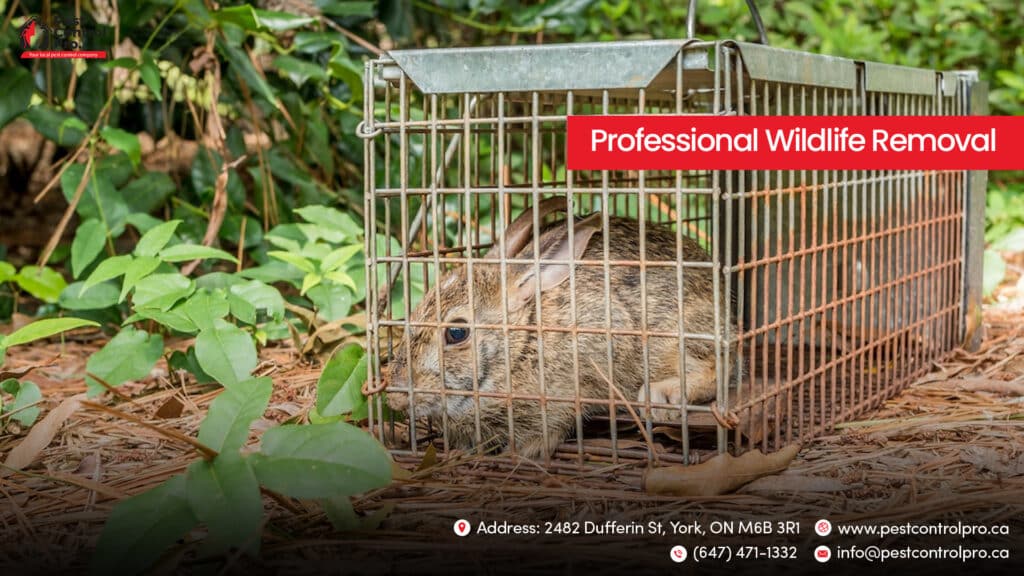
When trapping is necessary, humane methods rely on live traps designed to capture the animal without causing injury. From there, proper protocols around handling, timing, and release location matter just as much as the trapping itself. Separating a mother from her young, for example, is not just inhumane; it often leads to a far worse problem, since the orphaned animals may end up trapped inside your walls or attic with no way out.
Exclusion Techniques That Don’t Harm Animals
In many cases, the most effective and humane approach is not trapping at all, but exclusion. This involves identifying how the animal is entering the property, allowing it to leave naturally, and then sealing the entry point so it cannot return. One-way doors are commonly used here, letting an animal exit on its own schedule while preventing re-entry. This method tends to be less stressful for the animal and more permanent for the homeowner.
Signs You Might Have Wildlife in Your Home
Wildlife does not always announce itself with obvious noise right away. Scratching or thumping sounds in the attic, particularly at dawn or dusk when many species are most active, are usually the first clue. Beyond that, watch for chewed wiring or wood trim, droppings near entry points, a persistent musty or musky odour, or visible damage to vents, soffits, and rooflines. If you notice insulation that looks disturbed or flattened in a specific area, that is often a sign an animal has created a nesting spot nearby.
Smaller details matter too. A torn screen, a section of fascia board that looks slightly pried apart, or grease marks along a regularly used entry point can all point toward repeated activity rather than a single curious visit. Animals tend to follow the same path in and out once they have settled somewhere, so those subtle trails are often easier to spot than the animal itself.
Why DIY Wildlife Removal Can Backfire
It is tempting to handle a wildlife problem yourself, especially if the animal seems small or harmless. But this approach often creates more complications than it solves. Sealing an entry point before confirming the animal has actually left can trap it inside, leading to a far worse situation involving odour, structural damage, and an emergency removal down the line. Attempting to handle a mother and her young without proper experience can also separate the family in ways that lead to orphaned animals stuck inside your home with no way to leave.
There is also the simple matter of safety. Wild animals can carry parasites and diseases, and a cornered or frightened animal, even a normally docile one, can become defensive. Professional experience matters here, not because the situation is necessarily dangerous, but because doing it incorrectly tends to make things worse rather than better.
Toronto’s Wildlife Laws and Why They Matter
Ontario has specific regulations around how wildlife can be trapped, handled, and relocated, and these rules exist for good reason. Certain species are protected, and there are restrictions around how far an animal can legally be relocated, since releasing an animal too far from its home territory can actually reduce its chances of survival. Municipal bylaws in Toronto also play a role, particularly around how wildlife issues on residential properties should be addressed. Working with professionals who understand these regulations means you are not just solving the immediate problem; you are also staying on the right side of the law while doing right by the animal itself.
Simple Ways to Prevent Wildlife From Returning
Removing an animal solves the immediate issue, but prevention is what actually keeps your property protected long term. A bit of regular maintenance goes a long way toward making your home far less appealing to wildlife in the first place.
Securing Your Property
Trim back tree branches that hang close to your roofline, since these act as natural bridges for squirrels and raccoons looking for an easy way up. Store garbage in secured bins rather than leaving bags out overnight, and bring pet food indoors once your animal is finished eating. Capping your chimney with a proper screen and installing mesh guards over vents are both small investments that close off two of the most common entry points homeowners overlook.
Seasonal Timing Matters
Wildlife activity tends to follow predictable patterns throughout the year. Spring is when many species are raising young and actively searching for denning spots, while early fall brings a renewed push for warm shelter before winter sets in. Inspecting your property during these transition periods, rather than waiting until you hear noise overhead, gives you a much better chance of catching small entry points before they become an active den.
How Professional Humane Wildlife Removal in Toronto Works
A proper wildlife removal process typically follows a clear sequence, rather than jumping straight to trapping or sealing entry points.
Inspection and Identification
The first step is always a thorough inspection to confirm exactly what species is involved, where it is entering, and whether there are young present. This matters enormously, since the approach for a single adult raccoon looks very different from the approach needed when a litter is involved. A good inspection also checks the broader exterior, not just the obvious entry point, since animals often have more than one way in and out.
Safe Removal and Exclusion
Once the situation is fully understood, the appropriate method is used, whether that means installing a one-way exclusion device, safely relocating an animal according to provincial guidelines, or simply waiting out a short window until young are old enough to leave on their own with their mother. Timing decisions like this are not arbitrary. They are based on the specific species involved and how long it typically takes for young to become mobile enough to follow an adult out on their own.
Prevention and Follow-Up
The final step, and arguably the most important one, is sealing entry points properly so the same issue does not happen again next season. Wildlife tends to return to a previously successful den site if given the chance, so this step is what actually prevents a repeat call a few months later.
Why Homeowners Trust Pest Control Pro Toronto
This is exactly the kind of work we specialize in. We have handled wildlife situations across the city for years, from a single squirrel in a soffit to a full raccoon family settled into an attic before a homeowner even realized what was happening. Our approach always prioritizes humane methods first, since we believe effective results and ethical treatment of animals are not mutually exclusive.
Every inspection starts with identifying exactly what you are dealing with, rather than guessing or applying a one-size-fits-all solution. Whether you need a single exclusion device installed or a more involved removal and cleanup process, our technicians understand Toronto’s wildlife patterns, seasonal behaviour, and the local regulations that need to be followed every step of the way.
Final Thoughts
Sharing a city with wildlife is simply part of living in Toronto, and most of the time, animals and homeowners can coexist without much friction. Problems tend to arise specifically when an animal decides your home looks like a better option than the outdoors, and that is when professional intervention becomes necessary rather than optional. Handling it properly protects your property, keeps your family safe, and ensures the animal itself is treated fairly throughout the process.
Acting quickly once you notice signs of activity tends to make the entire process simpler, since early intervention usually means fewer young to manage and less property damage overall. Waiting it out rarely solves the problem on its own, and in most cases, the situation only grows more complicated the longer it goes unaddressed.
Frequently Asked Questions
What is considered humane wildlife removal?
It refers to methods that avoid harming the animal, such as exclusion devices and proper live trapping protocols, rather than lethal or unnecessarily stressful approaches.
Can I remove wildlife from my attic myself?
It is possible for very minor situations, but DIY attempts often go wrong, especially when young animals are involved or entry points are sealed too early, which can trap animals inside.
Is it legal to relocate wildlife in Ontario?
There are specific provincial regulations around trapping and relocating wildlife, including distance restrictions, which is why working with professionals familiar with these rules matters.
How do I know if there are baby animals in my attic?
Increased noise activity, particularly chattering or squeaking sounds, along with more frequent movement at certain times of day, often indicates young animals are present.
Does Pest Control Pro Toronto guarantee wildlife won’t return?
Proper exclusion work, including sealing entry points after an animal has left, significantly reduces the chances of repeat activity, and our process always includes this prevention step.